
What actually happens during a roof replacement
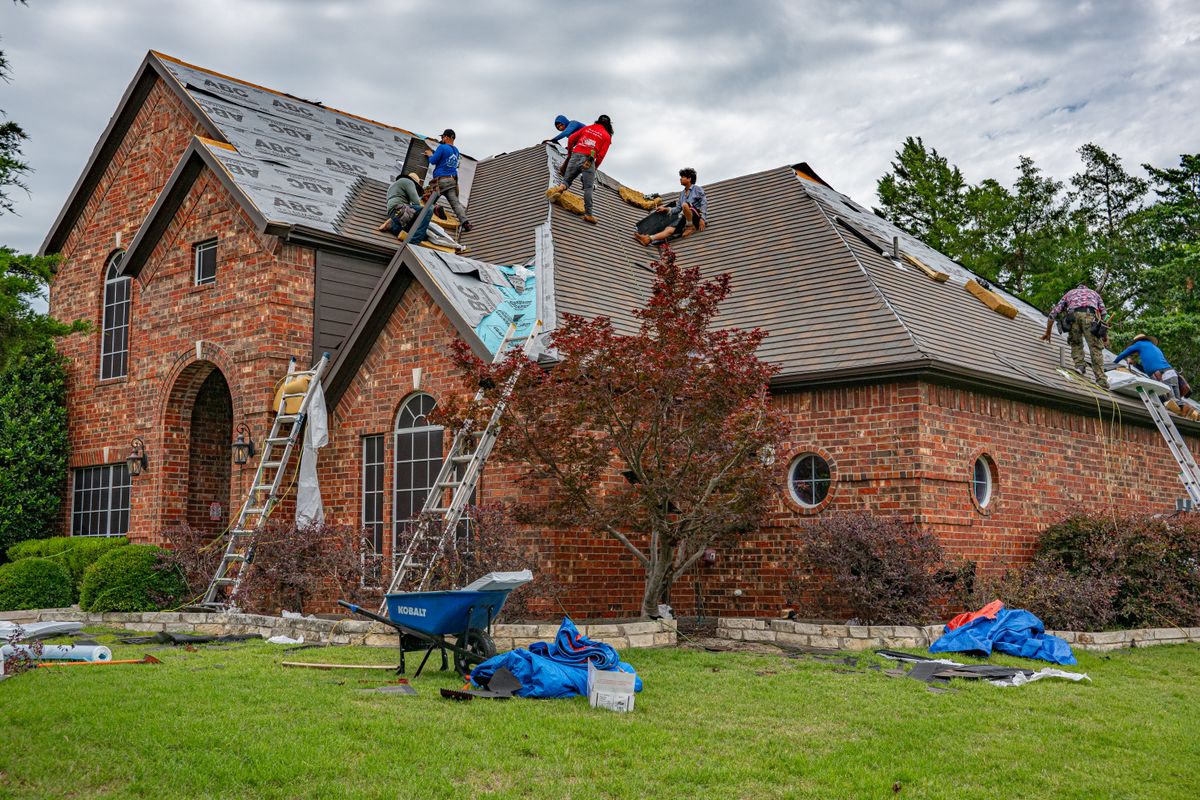
Most homeowners see a roof replacement twice in their life, which means most homeowners have no baseline for what a good one looks like. Good crews and bad crews alike count on that. Here is the whole day, in order, so you know what you are watching.
Before the crew arrives
A properly prepared job starts before the first ladder goes up. Materials should arrive a day or two ahead: shingles, underlayment, ice and water shield, drip edge, and ventilation components. The delivery should match the scope you signed line by line. If your contract named a 50-year architectural shingle and the pallets in your driveway say something else, ask before tear-off starts, not after.
The crew should protect everything under the work: tarps over landscaping, plywood over AC units, and a trailer or catch system for debris. Ten minutes of protection saves a season of picking nails out of flowerbeds.
Tear-off: the part that separates good from cheap
A full tear-off strips the roof to bare decking. This is the step corner-cutters skip by nailing new shingles over old ones. An overlay hides the decking condition, voids most manufacturer warranties, and cooks the new shingles from below. We do not do overlays, and we would tell you the same if you hired someone else: never accept one.
With the decking exposed, every sheet gets checked. Soft, delaminated, or rotted wood gets replaced. This is the one place a legitimate price can change mid-job, because nobody can see through shingles to the wood below. What matters is how the change is handled: in writing, with photos, at the material cost named in your contract, before the work continues.
The layers you will never see again
Six of a roof system's eight layers are invisible the day the crew leaves, and they are most of the reason a roof lasts forty years instead of nine. Ice and water shield along the eaves and valleys stops the freeze-thaw backup that central Ohio winters are famous for. Synthetic underlayment covers the rest of the deck. Drip edge keeps water off the fascia. New flashing goes around every chimney and wall, because reusing old flashing under new shingles is the leak you will find in three years.
Ventilation is the quiet one. A roof that cannot breathe bakes in summer and condenses in winter, and either one shortens shingle life dramatically. Ridge vents, intake at the soffits, and a balanced system matter more than any shingle brand.
How to judge the finish
Straight courses, clean cuts at valleys and edges, no exposed nails on the field, chimney flashing stepped and counter-flashed rather than smeared with caulk. The yard should be magnet-swept for nails, and then swept a second time. You should get photos of the work, including what got covered up, and your warranty paperwork registered, not just promised.
One honest disclosure: weather moves roofing schedules. A responsible crew will not open more roof than they can dry-in the same day, and a rescheduled start is a sign of discipline, not disorganization.
What it costs
Every roof is different enough that a citywide average is nearly useless. Size, pitch, facets, decking condition, and material choice move the number more than any statistic. That is exactly why we price from your actual roof: book online and three fully specified options for your full replacement arrive in your inbox the same day, free, with the measurement report to check against any other bid.
Book a full roof replacement online and three fully specified options for your exact roof arrive the same day: free, fully specified, no sales visit. Repairs and storm damage get a free assessment.